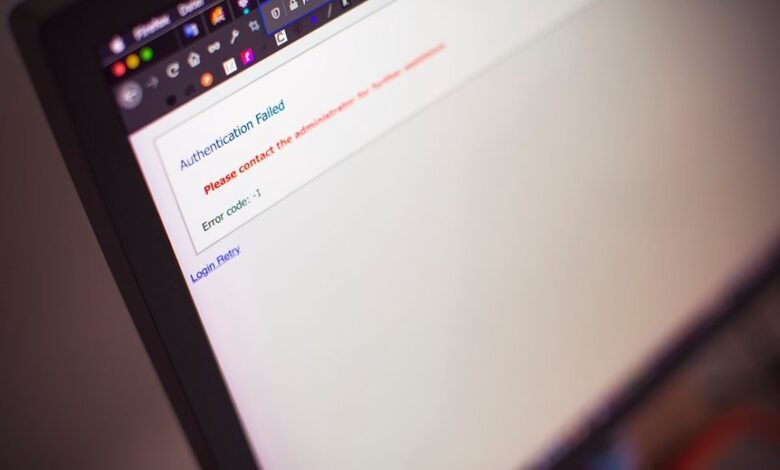
Users facing persistent errors with 501-777-1028 should first map when and where issues occur and assess their impact on reach and trust. They can note error messages, routes, and steps to reproduce. Quick fixes—if any—should be tested methodically, prioritizing those with the broadest effect. If issues persist, they should escalate with precise incident details and maintain an audit trail, while considering safer routing tweaks and clear rollback plans to minimize risk. The next step may reveal a path forward.
Identify the Error Pattern and Its Impact
The pattern of errors associated with 501-777-1028 typically emerges as repeated call failures or misrouted attempts, signaling issues in network routing, caller identification, or carrier-level blocking. This identifies an error pattern with tangible consequences. An impact assessment highlights loss of reach and trust. Document occurrences, escalate appropriately, and seek support while considering safer alternatives if problems persist and quick fixes you can try right now.
Quick Fixes You Can Try Right Now
Quick fixes can mitigate recurring errors tied to 501-777-1028 by enabling immediate assessment and remediation. The approach identifies error patterns, prioritizes impact assessment, and documents steps for reproducibility. If unresolved, support escalation is initiated with concise incident details. Documentation best practices are applied to capture configurations and outcomes, ensuring clarity, repeatability, and freedom from ambiguity for users and technicians alike.
Safer Alternatives If Problems Persist
Safer alternatives if problems persist involve structured, non-intrusive options that minimize risk while maintaining visibility into the issue. This approach emphasizes error patterns, impact analysis, and migration paths.
It favors documentation practices, rollback strategies, testing methods, and compliance checks, while safeguarding data integrity, accessibility, security, and privacy. It also highlights monitoring alerts, audit trails, onboarding tips, and user education for empowerment.
How to Document, Escalate, and Seek Support
When encountering persistent issues, a structured approach to documenting, escalating, and seeking support ensures clarity and faster resolution.
The article outlines practical steps: record timestamps and exact error messages for error documentation; centralize screenshots and logs; follow a formal escalation strategy that prioritizes impact, assigns ownership, and sets deadlines; contact channels, response expectations, and follow-up procedures are clearly defined for user autonomy.
Frequently Asked Questions
What General Causes Could Trigger This Error Across Apps?
General latency and API mismatches commonly trigger this error across apps. The issue arises from network delays, inconsistent data formats, version drift, and mismatched authentication scopes, prompting timeouts, invalid responses, or deteriorated integration performance.
Can This Error Occur on Non-Android Devices?
Yes. The error can occur on non-Android devices. The rendering shows cross-platform scenarios where error handling and OS compatibility become factors, with distinct logs and traces. The description remains clear, structured, and oriented toward freedom-minded users.
Will Changing Usernames Affect Error Recurrence?
Changing usernames may influence error recurrence, but it does not guarantee resolution. The approach is to consider consistent account identifiers, verify permissions, and implement monitoring. It remains essential to document steps for resolving errors and user-focused troubleshooting.
Is There a Known Time Window for Resolution?
A hypothetical case shows a two-hour window; typically, solution timeframes range from minutes to a business day. The known window depends on system, but proactive error prevention reduces recurrence, narrowing resolution expectations and stabilizing access.
Are There Any Automatic Data Backups I Should Restore?
Automatic backups exist for data restoration; cross-platform compatibility is supported, but error triggers may recurrently disrupt processes. The user is advised to verify backup integrity, perform staged restores, and monitor automatic backups to ensure reliable data restoration across environments.
Conclusion
Common errors around 501-777-1028 should be traced to recurring patterns, noting when, how, and where failures occur to gauge reach and trust. Quick, non-intrusive fixes should be attempted first, followed by safer routing adjustments if issues persist. Document steps, escalate with clear incident details, and preserve an audit trail. An interesting statistic: organizations that document error patterns cut recovery time by up to 40%, illustrating the power of structured incident management in reducing user impact and restoring confidence.